Medically Reviewed
Written by Pooja Rawat, Medical Content Writer
Good vision is essential for daily life, but screens, poor lighting, and lack of sleep strain your eyes. The good news? The best eye experts in Thane say simple eye exercises such as palming, figure eight eye rolling, etc., can reduce strain, improve focus, and support long-term eye health, when done consistently and paired with healthy habits.
Pro Tip: Watch Wavikar’s eye workout video for a visual guide.
Important: Eye exercises cannot cure serious conditions like glaucoma, cataracts, myopia, or astigmatism. They’re best for digital eye strain, focus training, and muscle relaxation. Always consult an ophthalmologist for vision problems.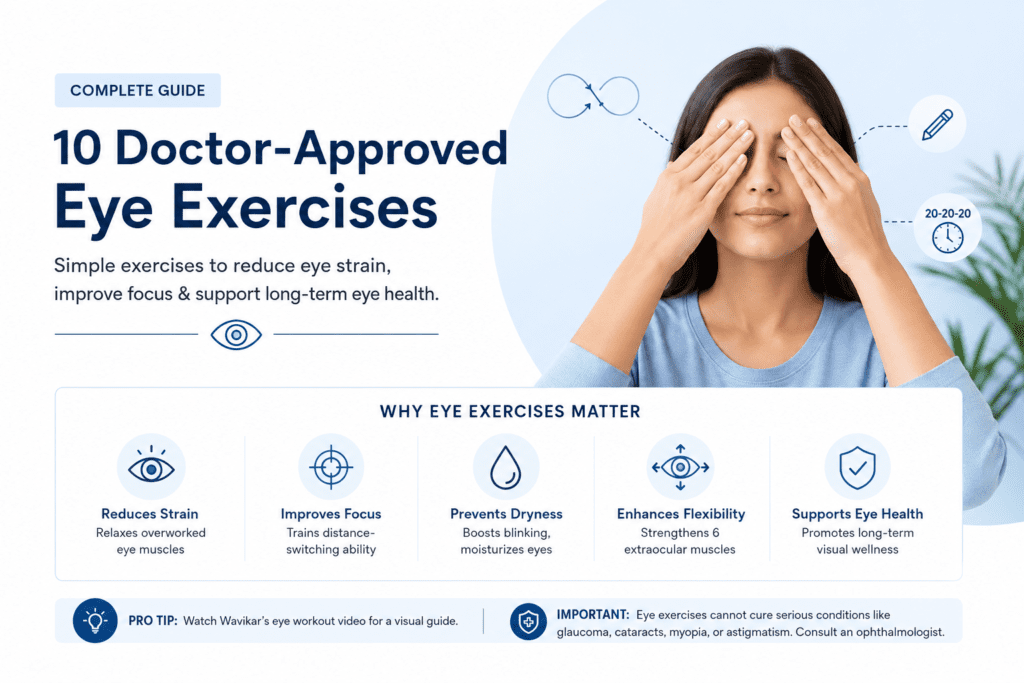
Why Eye Exercises Matter in 2026
Eye exercises are designed to improve the flexibility and strength of your eye muscles, enhance focus, and reduce eye strain. While these exercises cannot cure serious eye conditions like glaucoma or cataracts, they are highly beneficial for alleviating digital eye strain, improving focus, and supporting overall eye health. By incorporating exercises to improve eyesight into your routine, you can take a proactive approach to maintaining your vision.
In early 2025, EY observed that Indians collectively spent 1.1 lakh crore hours staring at their smartphones in 2024.
That’where, eye exercises can help:
|
Benefit |
How It Helps |
|
Reduces strain |
Relaxes overworked eye muscles |
|
Improves focus |
Trains distance-switching ability |
|
Prevents dryness |
Boosts blinking, moisturizes eyes |
|
Enhances flexibility |
Strengthens 6 extraocular muscles |
Exercises are most effective for:
- Prolonged screen users (students, IT professionals)
- People with temporary blurriness after reading
- Those seeking natural ways to complement eye care
10 Doctor-Approved Eye Exercises (Step-by-Step)
Your eyes work hard every day, from staring at screens to reading and everything in between. Just like any other muscle in your body, your eyes need exercise to stay healthy. These simple eye exercises can help improve your eyesight and maintain better vision over time.
1. Palming (Best for Relaxation)
How to:
- Rub hands together to generate warmth
- Close eyes, gently place palms over them (no light enters)
- Breathe deeply for 2–3 minutes

Read Also: Eye Styes Explained: Causes, Symptoms, And How To Treat Them
2. Figure Eight
How to:
- Imagine a large figure 8, 10 feet ahead
- Trace it slowly with your eyes for 1 minute (clockwise)
- Reverse direction for 1 minute
The figure eight exercise improves the flexibility and control of your eye muscles. Practicing this exercise regularly can help increase eyesight and strengthen your eye muscles.
Read Also: What Is Night Blindness? Symptoms, Causes And Treatment
3. Near and Far Focus
How to:
- Hold thumb 10 inches from face, focus 15 seconds
- Shift to object 15–20 feet away, focus 15 seconds
- Alternate 2–3 minutes
This exercise trains your eyes to switch focus between objects at different distances. This technique is highly effective for individuals looking for ways to increase eyesight naturally.
Read Also: The Ultimate Guide to the Best Foods for Eye Health
4. Conscious Blinking
How to:
- Set timer for 2 minutes
- Blink every 3–4 seconds deliberately
Blinking is a simple yet powerful exercise to improve eye health and vision. Blinking moisturizes your eyes, prevents dryness, and reduces strain, especially after prolonged screen use.
Read Also: Protect Your Eyesight: Key Vitamins And Supplements For Healthy Vision
5. Eye Rolling
How to:
- Sit comfortably, look straight
- Roll eyes clockwise 5–10 times, then counterclockwise
Eye rolling strengthens the eye muscles and improves flexibility..
Read Also: How to Improve Eyesight Naturally? Eye Care Tips
6. The 20-20-20 Rule
This rule is perfect for combating digital eye strain. Every 20 minutes, look away from your screen and focus on an object 20 feet away for at least 20 seconds. This exercise not only relaxes your eyes but also improves your ability to shift focus between near and distant objects.
7. Pencil Push-Ups (Doctor-Prescribed for Convergence)
How to:
- Hold pencil at arm’s length, focus on tip
- Slowly bring closer to nose while maintaining focus
- Move back out, repeat 10 times
Pencil push-ups are a common exercise prescribed by eye doctors to improve focus and convergence.
8. Zooming
How to:
- Hold thumb at arm’s length, focus
- Move closer while keeping focus, then back out
- Repeat 2 minutes daily
Zooming is an effective exercise to improve eye focus and coordination.
9. Side-to-Side Eye Movements
How to:
- Look straight, shift gaze right, hold 1 second
- Shift left, hold 1 second
- Repeat 10 times each direction
This exercise improves peripheral vision and strengthens eye muscles.
10. Diagonal Eye Movements
How to:
- Look top-right → bottom-left, repeat 10 times
- Switch: top-left → bottom-right, 10 times
Diagonal eye movements enhance the flexibility of your eye muscles.
Regularly practicing these eye exercises can help reduce strain, improve focus, and support overall eye health. However, it’s important to combine these exercises with a balanced diet, proper lighting, and regular eye check-ups to achieve the best results.
Which Eye Exercise Is Best for Improving Eyesight? According to Your Goal
Eye experts at Wavikar Eye Institute says, there’s no single “best” exercise. A combination works best:
|
Goal |
Best Exercise(s) |
|
Relaxation |
Palming |
|
Dry eyes |
Conscious Blinking |
|
Flexibility |
Near–Far Focus, Figure Eight |
|
Convergence |
Pencil Push-Ups |
|
Digital fatigue |
20-20-20 Rule |
For screen-heavy routines, 20-20-20 + Palming + Blinking gives the fastest relief.
4 Daily Habits to Improve Eye Vision (Beyond Exercises)
In addition to eye exercises, incorporating certain habits into your lifestyle can significantly contribute to better vision and overall eye health.
1. Follow a Balanced Diet
Good nutrition is crucial for healthy eyes. Include foods rich in:
- Vitamin A: Found in carrots, sweet potatoes, and spinach.
- Omega-3 Fatty Acids: Found in fish like salmon and flaxseeds.
- Vitamin C and E: Found in citrus fruits, nuts, and seeds.
Eating these nutrients regularly can enhance your eye health and help improve eyesight over time.
Learn more: Best Foods for Eye Health
2. Stay Hydrated
Dehydration can lead to dry eyes and discomfort. Ensure you drink plenty of water throughout the day to keep your eyes hydrated.
3. Protect Your Eyes from UV Rays
Exposure to UV rays can harm your eyes. Always wear sunglasses with UV protection when outdoors to reduce the risk of damage.
4. Limit Screen Time
Excessive screen time is one of the leading causes of digital eye strain. Take regular breaks using the 20-20-20 rule to reduce strain and protect your vision.
Evidence-Based Reality: What Eye Exercises Can & Cannot Do
1. Digital Eye Strain
Exercise Name: Palming, 20-20-20 Rule, Blinking
What It Can Do (Scientific Fact): Reduces strain by 50–70%; lowers eye fatigue scores significantly (P = 0.003)
What It Cannot Do: Cannot cure myopia, astigmatism, or refractive errors
2. Focus Flexibility
Exercise Name: Near–Far Focus, Zooming
What It Can Do (Scientific Fact): Improves accommodation flexibility and distance-switching ability
What It Cannot Do: Cannot reverse axial elongation causing myopia
3. Eye Muscle Strength
Exercise Name: Figure Eight, Eye Rolling, Side/Diagonal Movements
What It Can Do (Scientific Fact): Strengthens 6 extraocular muscles; improves smooth pursuit and coordination
What It Cannot Do: Cannot correct cataracts, glaucoma, or retinal diseases
4. Convergence (Squint) Eye Exercise
Exercise Name: Pencil Push-Ups, Brock String
What It Can Do (Scientific Fact): Up to 72% reduction in deviation in convergence insufficiency; effects last 3–6 months
What It Cannot Do: Not a replacement for surgery in severe strabismus
5. Eye Exercise for Lazy Eye (Amblyopia)
Exercise Name: Pencil Push-Ups + Patching
What It Can Do (Scientific Fact): Improves binocular function when combined with patching under ophthalmologist guidance
What It Cannot Do: Cannot work alone; requires medical treatment
6. General Eye Health
Exercise Name: All exercises + healthy habits
What It Can Do (Scientific Fact): Supports muscle health, reduces dryness, prevents fatigue
What It Cannot Do: Cannot prevent genetic or age-related eye diseases
Can Eye Exercises Prevent Vision Problems?
While eye exercises can’t cure medical conditions like myopia or astigmatism, they can reduce strain, improve focus, and enhance overall eye health. Combining these exercises with good lifestyle practices and regular check-ups can make a significant difference in maintaining your vision.
Best Exercise for Eyes and Eyesight Improvement
If you’re wondering what the best exercise for eyes is, there isn’t just one. Instead, a combination of techniques provides the best results. The most effective best exercise for eyesight improvement routines include:
- Palming for relaxation
- Blinking to prevent dryness
- Near–far focusing to improve flexibility
- Pencil push-ups for convergence
- The 20-20-20 rule to combat digital fatigue
Doing these consistently enhances your eye strength and supports long-term visual wellness.
Can Eye Exercises Prevent Vision Problems?
No, they can’t prevent/cure:
- Myopia (nearsightedness)
- Astigmatism
- Glaucoma or cataracts
But they CAN:
- Reduce digital eye strain by 50–70%
- Improve focus flexibility
- Support overall eye muscle health
Always pair exercises with regular eye check-ups.
If you are still searching for “eye exercise for myopia” then the answer is the above given exercises cannot cure or reverse true myopia, however, they can help reduce eye strain, improve focus flexibility, and slow progression in some cases. Always consult your doctor to address the eye issue.
When to Consult an Eye Doctor
Eye exercises are safe for mild strain, but stop and see a doctor immediately if you experience:
- Sudden vision loss (one or both eyes)
- Flashes of light or new floaters
- Curtain-like shadow across vision
- Severe eye pain with nausea/vomiting
- Eye injury with embedded object or chemical burn
- Double vision (sudden onset)
Are you looking for the Best Eye Hospital for complete eye care? Then NABH-accredited Wavikar Eye Institute is the best option.
What you can expect:
- Advanced technology.
- Comprehensive care.
- NABH-accredited systems in alignment with strict quality and safety standards
- State-of-the-art, compassionate eye care.
- Experienced eye experts like Dr. Chandrashekhar Wavikar.
Rated 4.8★ based on 3,598 Google reviews.
Conclusion
Improving your vision involves a combination of eye exercises, healthy habits, and consistent care. Whether it’s practicing eye exercises to improve vision, eating a balanced diet, or taking regular breaks from screens, small changes can lead to significant results.
Start today with the exercises and tips shared in this guide and experience the difference they can make for your vision. Remember, taking care of your eyes is an investment in your overall well-being.
Visit Wavikar Eye Institute, where expert ophthalmologists provide comprehensive eye care tailored to your needs. Schedule your consultation today.
Disclaimer
The information on this blog is for educational purposes only. Eye exercises may support eye health but are not a substitute for professional medical advice. Consult an eye care specialist for vision problems.