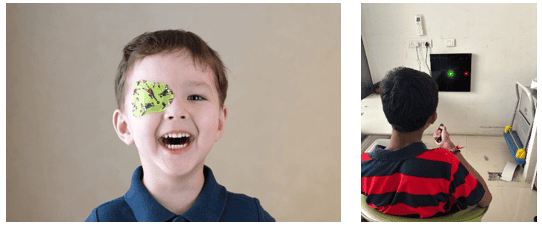
Amblyopia, commonly known as lazy eye, is a developmental disorder in which vision in one or both eyes does not develop normally despite the eye appearing structurally normal. It occurs because the brain favors one eye and gradually suppresses the image from the weaker eye. If untreated during childhood, the reduced vision can become permanent. Amblyopia affects approximately 2–5% of children and is one of the leading causes of preventable visual impairment in childhood.
The most common causes of amblyopia include squint, unequal refractive errors between the eyes (anisometropia), high refractive errors in both eyes, congenital cataract, drooping eyelid (ptosis), or any condition that blocks clear vision during the critical years of visual development usually before 8 years of age.
Children with amblyopia often do not realize they have poor vision in one eye because the stronger eye compensates for the weaker eye. Many cases are detected only during routine vision screening.
Treatment focuses first on correcting the underlying cause. Refractive errors are corrected by spectacles. Patching (occlusion therapy) is the gold standard treatment for amblyopia. It involves patching of the good eye so that the child is forced to see with the lazy eye which helps in visual improvement of the weak eye. Wavikar Eye Institute is equipped with the latest Orthoptek exercises for treating amblyopia. These exercises are aimed at significantly improving the vision eye of the weaker eye. Orthoptek exercises have shown to improvement in vision even in adult patients.
Success depends greatly on early diagnosis and compliance with treatment. The younger the child, the greater the visual improvement. Regular follow-up is essential to monitor progress and modify treatment as vision improves.
 Call Now
 Book Appointment
 Enquire Now