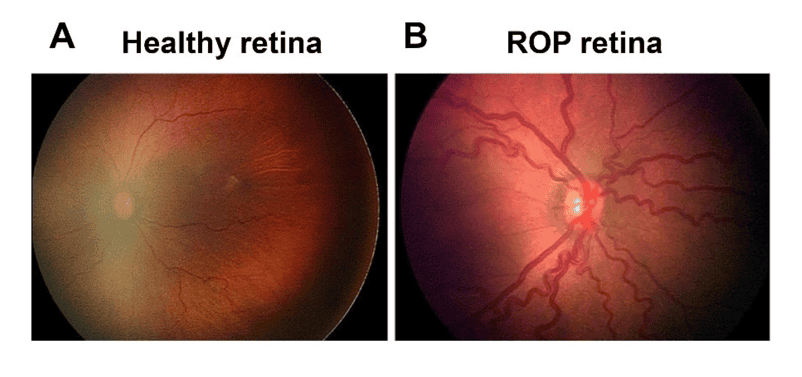
Retinopathy of prematurity (ROP) is an eye condition that can affect premature or low-birth-weight babies. It occurs because the blood vessels of the retina—the light-sensitive layer at the back of the eye—have not completed their normal development before birth.
The blood vessels of the retina normally develop during the later stages of pregnancy. When a baby is born prematurely, these vessels may be immature. After birth, abnormal blood vessel growth can sometimes occur.
Several factors can increase the risk, including very early gestational age, low birth weight, prolonged oxygen requirement and other medical problems associated with prematurity.
Screening for is very important because ROP usually has no visible symptoms in its early stages.If the disease progresses to advance level, then it causes significant visual disability.
Timely retinal examination by an ophthalmologist experienced in ROP is essential for babies who meet screening criteria.
The first screening examination needs to be performed at the appropriate time based on the baby’s gestational age and birth history, usually between 15 days to 1month after delivery.
Many mild cases of ROP resolve naturally as the baby’s eyes mature and may only require regular observation. More severe disease may require treatment to prevent retinal damage and vision loss. Depending on the type and severity of ROP, treatment may include laser therapy or anti-VEGF injections. In advanced cases where retinal detachment has developed, vitreoretinal surgery may be required. The choice of treatment depends on the stage and location of ROP and the individual condition of the baby.
Preterm babies require a regular ophthalmic evaluation as these children have high incidences of developing a refractive error or a squint in their eyes.
 Call Now
 Book Appointment
 Enquire Now